
Trace Former Dorchester Owners
The Clerk keeps Dorchester land records dating to 1665. Archives catalogs list electronic series from 1669. The searchable cutoff varies by county screen and instrument, so begin with current evidence and move backward.
| Source | Years It Covers | Where Held | What It Shows |
|---|---|---|---|
| MDLandRec index | County-screen specific | Maryland State Archives portal | Grantors, grantees, instruments |
| Deed books | Colonial era forward | Clerk and Archives | Full transfers and references |
| PLATS.NET | Series-specific | Archives portal | Subdivision and lot history |
| Assessments and local files | Collection-specific | Maryland Room and Archives | Year-by-year context |
Use SDAT only to find the present owner of record and the deed reference. The backward chain itself lives in recorded deeds.
Start With Dorchester's Newest Deed
Start with the newest deed. Copy its liber/folio reference from the current parcel card. In MDLandRec, confirm the legal description and identify the newest grantee. That deed's grantor is the first former owner. Search that person as a grantee to find the deed conveying the same land, then repeat the move.
Dates alone make weak matches. Compare tract name, acreage, adjoining owners, map and parcel, and prior deed references instead, because a quitclaim may transfer only a partial interest while a warranty deed carries different covenants.
Dorchester Index Filters
MDLandRec offers unusually fine filters. You can narrow by corporation or last name, first and middle names, suffix, legal capacity, ownership type, and grantor or grantee party type. Instrument, remarks, cross-reference Book/Page, date, and sorting controls refine results further. Fuzzy and Soundex-style options catch spelling drift. Search both modes when the chain crosses an entity.
The fall 2025 release requires a new account. Pages newer than 100 years cost $0.20 each, older pages stay free, and viewed pages remain available for only 30 days, so download copies promptly.
Dorchester MDLandRec Access
The official MDLandRec login opens Dorchester deed images remotely.
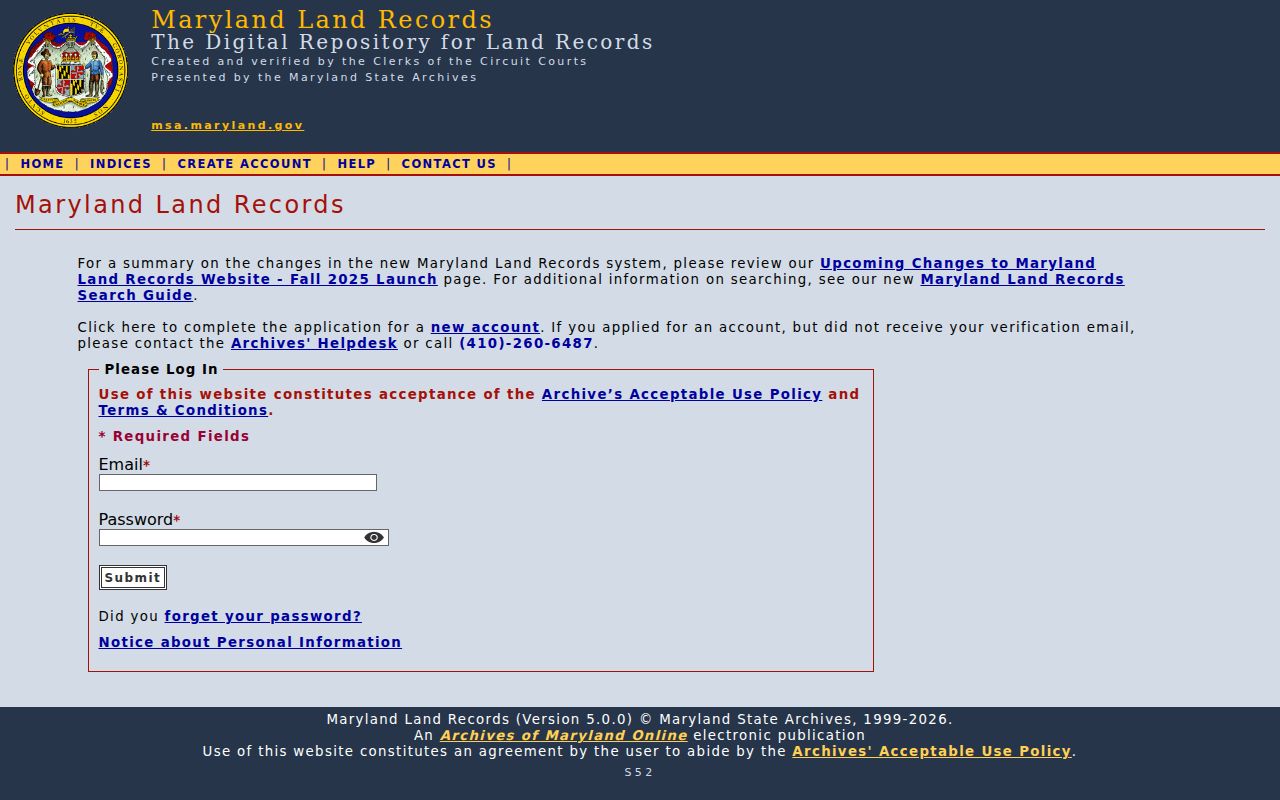
Create the required account on MDLandRec before starting a long chain of Dorchester County deed records, and save cited pages while they remain available.
Walk Dorchester's Deed Chain Backward
Build a dated timeline of every transfer. Each row should name the parties, deed type, and Book/Page, with a note recording the legal-description match.
- Find the current owner's acquisition deed.
- Record its grantor, date, instrument type, and prior reference.
- Search that grantor as an earlier grantee.
- Verify the same legal description, then repeat.
- At the index limit, use Jump to New Volume with Clerk, Book, and Page.
- Grantor
- The party transferring an interest.
- Grantee
- The party receiving it.
- Chain of title
- The ordered sequence of transfers for the land.
- Reverse index
- An index organized to find grantees rather than grantors.
- Legal description
- The recorded text identifying the tract.
Jump Into Older Dorchester Books
Electronic name indexes do not reach everything. MDLandRec's Jump to New Volume function opens images outside the index when you hold a Clerk, Book, and Page reference. Prior-deed citations inside each instrument supply exactly that bridge. The Archives guide lists Dorchester grantor, grantee, and land-record series reaching through colonial and later volumes.
For in-person work, visit the Clerk's public research room at 206 High Street in Cambridge. Staff provide access and copies, not title searches.
Index cutoff. Check the selected Dorchester screen for current coverage. Do not claim one universal online start year.
The 1852 Dorchester Fire
The courthouse burned on May 9, 1852. The fire destroyed records but did not automatically break every Dorchester property history. Later deeds often recited earlier Book/Page references. Boundaries, prior parties, land commissions, duplicate documents, plats, probate material, tax assessments, and Archives series can rebuild missing stretches.
Keep the uncertainty explicit. A reconstructed ownership sequence is useful historical evidence, but it is not an uninterrupted professional title examination.
Dorchester Plats Preserve Tract Clues
Plats carry their own clues. PLATS.NET indexes Dorchester plat series. The survey, subdivision, condominium, highway, and archival series include named entries like Appleby, Dundean Addition, Overbrook Park Addition, West Secretary, and Robinson-Mace that can link a modern lot to its parent tract.
Road plats matter too. Duke's Landing and Henry's Overlook records show how lot-line agreements and abandonment reshape current parcel geometry without erasing the original subdivision history.
View Dorchester Plat Search
The official PLATS.NET screen offers several search routes.
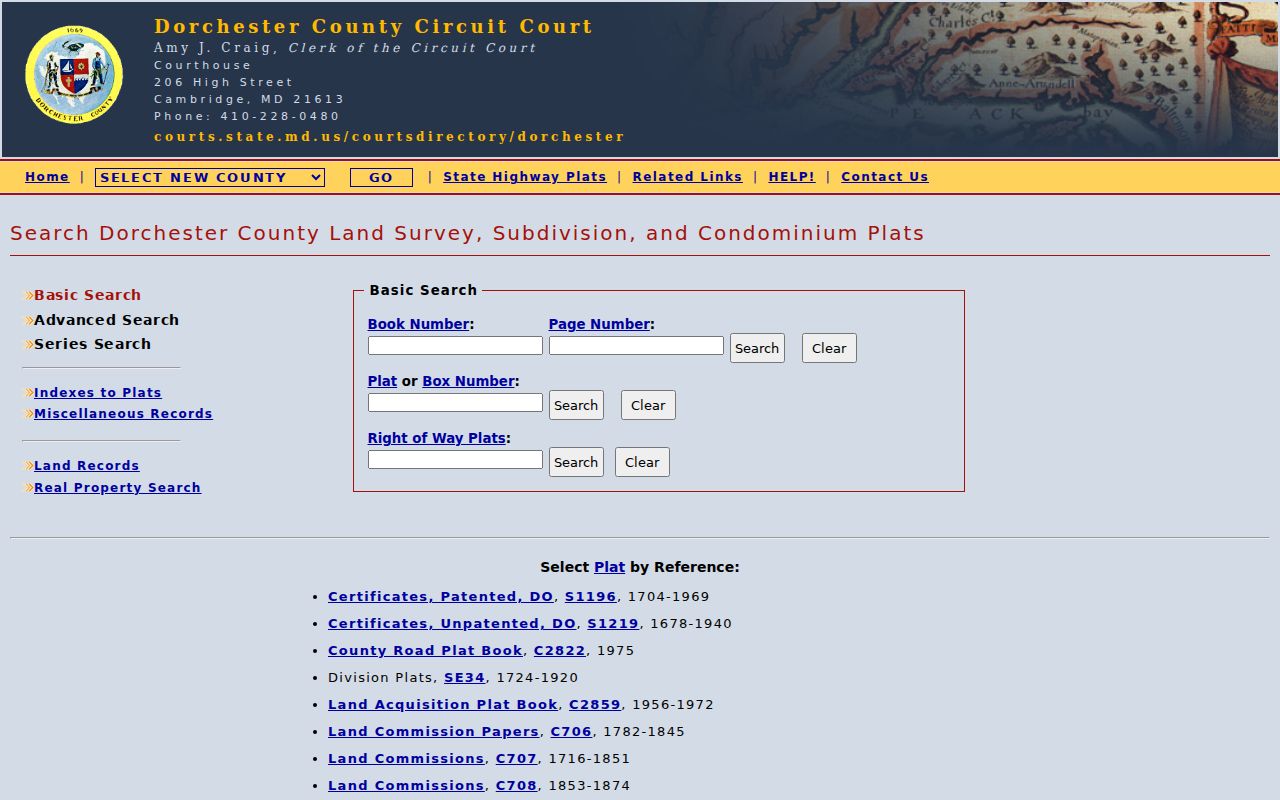
A named subdivision or Book/Page clue can reconnect an old deed to the current parcel. Lot lines and street labels change over time.
Build a Dorchester Transfer Timeline
Give each verified event its own row. Record the recording date, grantor, grantee, deed type, Book/Page, consideration when stated, and the legal-description clue that proves continuity. Mark probate, foreclosure, trustee, corrective, and quitclaim instruments rather than forcing them into the shape of an ordinary sale.
Leave gaps visible. Before calling a transfer lost, search name variants, legal capacities, corporate names, cross-references, and adjoining-owner descriptions. Label uncertain links instead of presenting them as fact.
Names Change Across Dorchester Records
Names shift across Dorchester records. Expect initials, middle names, suffixes, spelling variants, married names, company reorganizations, and trustees acting in different capacities. MDLandRec's name and ownership filters tune the net. Search the same party as both grantor and grantee when the expected transfer never appears.
A name match is only a candidate. Confirm the parcel through its legal description, tract or subdivision, acreage, neighboring owners, and prior references. Similar trust names may concern unrelated land. Keep brief notes on rejected candidates so the same false lead is never researched twice.
Test Each Dorchester Chain Link
Test every link before you trust it. Each step back through Dorchester County property records should answer three questions. Did the named grantor actually receive the land before selling it? Does the legal description point to the same tract? Does the older reference connect without an unexplained gap? Write down the affirmative evidence and every conflict you notice. A changed acreage can signal a conveyance out, a subdivision, a road taking, or a boundary adjustment rather than a data error. A different surname may just mean marriage, inheritance, or a grantor acting in a representative capacity. When the deed records alone cannot explain a transition, turn to plats, probate files, and land commission proceedings. Historic assessment books and city directories can enrich a house history. Still, neither one substitutes for a missing conveyance. This evidence-first approach keeps a former-owner timeline honest. A plausible sequence never gets presented as a proven chain of title.
Dorchester Probate Breaks the Pattern
Ownership does not always pass through a simple arms-length deed. Estates, personal representatives, trustees, partition actions, and land commissions all play a part. They can break a tidy seller-to-buyer sequence in Dorchester County deed records. A former owner may have died. Heirs may have conveyed at different times. When that happens, search probate and court records alongside the deeds.
The Dorchester Library Maryland Room holds assessments, maps, directories, microfilm, land records, and local-government documents. Appointments and sign-in are preferred. Digitization work can also affect access. So call before you travel.
Start with the deceased owner's last deed as your parcel anchor. Then locate the estate docket. Pull the will, letters, inventory, account, and any petition or order authorizing sale or distribution. Search land records in both party directions. Cover the personal representative, the estate, the heirs, and the later buyer. A foreign proceeding can surface when someone lived outside Maryland yet still owned Dorchester land. Before adding any event to the former-owner timeline, match the probate legal description carefully. Check it against the SDAT account, the GIS parcel, and the deed recitals. Relationship records may explain a changed surname. But only the probate order or the recorded transfer supplies real property evidence.
How Far Dorchester Owners Go Back
Dorchester County's surviving land records reach into the seventeenth century. Age alone proves little, though. A modern parcel's provable chain depends on its specific references, later subdivisions, record losses, and whether older descriptions can still be matched. Patents, land commissions, plats, probate files, and assessment rolls can carry research past a gap in the deed index.
Lawful use. Former-owner research supports house history, estates, and property diligence. Never use historical records to stalk, harass, or harm a living person.