
Find Who Owns Dorchester Property
Your first stop is the SDAT Real Property Search. Pick Dorchester County. It carries code 10. You can pull up a parcel by street address. You can also search by its ten-digit account number or by map reference. One limit to know: SDAT will not search by owner name. It also skips town, subdivision, neighborhood, and ZIP lookups.
- Search the address in SDAT and open its parcel card.
- Record Owner Name, transfer date, and deed reference.
- Confirm the newest grantee in MDLandRec.
- Check an LLC through Maryland Business Express.
Dorchester SDAT Owner Field
SDAT's parcel card calls the assessment owner "Owner Name." The card also splits premises and mailing addresses apart, which helps when mail goes somewhere other than the land itself. Account, map, and parcel numbers sit beside values, transfer details, and the deed reference. That bundle of fields makes it easier to tell one tract from another with a similar address or owner name.
Dorchester publishes no fixed lag between a closing and the tax roll update. A freshly recorded deed can surface at the clerk's office before SDAT catches up. Note: Date-stamp both searches and let the latest recorded deed control any current confirmation.
When Dorchester Addresses Fail
A street name alone can work where a full address does not. SDAT lets you drop the house number and search with a trailing wildcard, which often rescues rural land, vacant parcels, and addresses that have changed over time. When a name keeps failing, Dorchester County GIS can pin down the parcel instead, and you can carry its account or map reference straight back to SDAT. One caution applies. A postal city or ZIP proves nothing about municipal limits.
Where Dorchester Ownership Appears
No single lookup tells the whole story of a Dorchester County parcel. The tax roll names the owner of record, deed records show how the transfer happened, a GIS map places the tract, and entity filings explain a company name.
| Source | Owner Info It Gives | Access |
|---|---|---|
| SDAT roll | Owner Name, mailing, transfer, deed reference | Free search |
| MDLandRec | Latest deed and grantee | Account; some page fees |
| Business Express | Entity status and registered agent | Free search |
| County GIS | Parcel identity and geography | Free maps |
Ownership does not always mean occupancy. A Dorchester County tax bill may carry a mailing address far from the land itself. The owner field can also list an LLC, a trust, an estate, or a trustee rather than a person.
Dorchester Entity Ownership
A company may appear in Dorchester County property records. Copy the LLC name exactly into Business Express. The registered agent listed there is a legal contact. That role does not prove who ultimately benefits from the property. Deeds involving trusts and estates often name a trustee or a personal representative. Some name another legal capacity instead. Always read that capacity before drawing any conclusion about the true owner.
- Owner of record
- The party named in public land and assessment records.
- Grantee
- The party receiving an interest under a deed.
- Situs
- The physical parcel address.
- Mailing address
- The destination for assessment correspondence.
Dorchester Deeds Confirm Ownership
For the strongest proof, turn to deed records. The Circuit Court Clerk's Land Records Department keeps real-estate instruments dating back to 1665. It also runs a public research room in Cambridge. Staff there provide access and copies. They will not perform a title search or offer legal advice, however.
MDLandRec opens another route into the county's deed records. After selecting Dorchester, you can search by party, ownership, instrument, date, or Book/Page. Its fall 2025 release requires an account. Records newer than 100 years cost $0.20 per page under that release notice. Older records stay free.
Open Dorchester's Deed Portal
The official MDLandRec account screen opens the remote path to Dorchester County deed records.
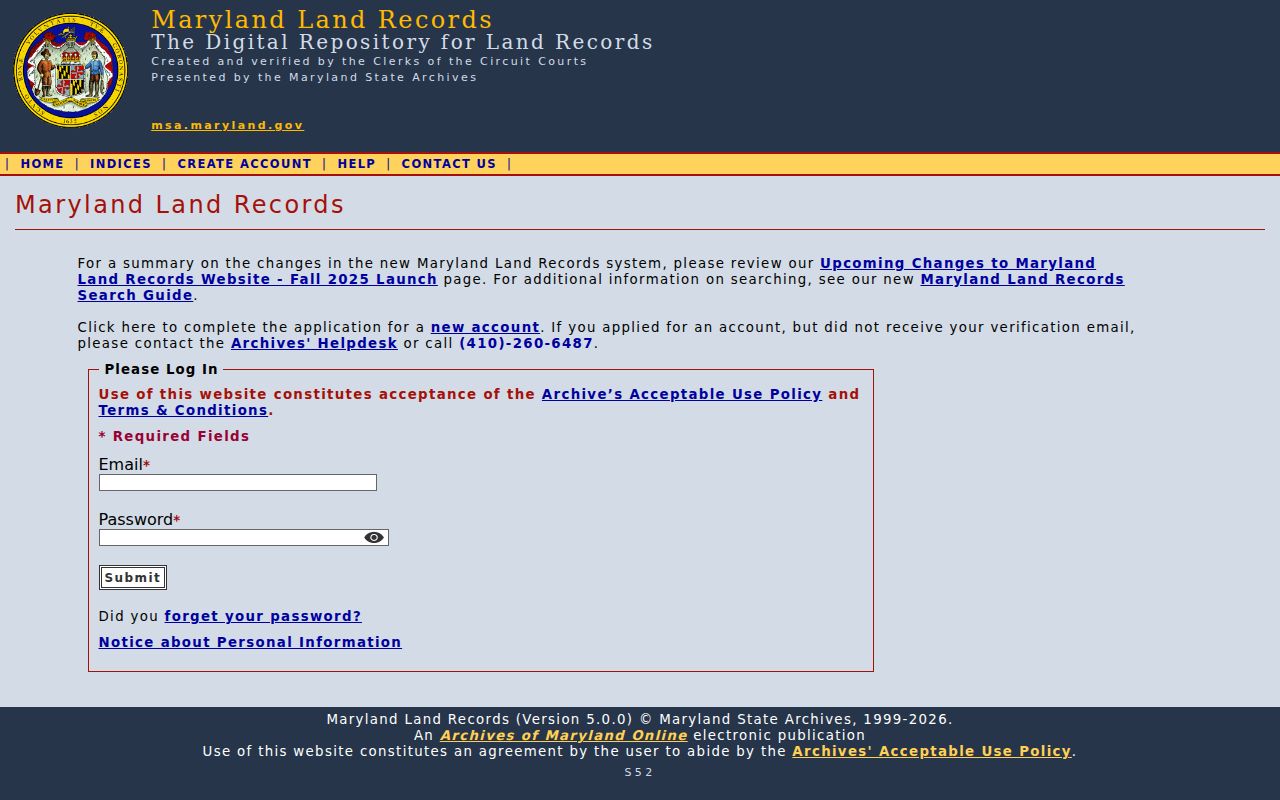
Log in first. Pick Dorchester County, then trace the current deed by grantee name or by the SDAT deed reference, which usually points straight to the matching instrument.
Dorchester Clerk Research Room
The official Clerk office page describes the land-record collection held at the courthouse. Its public research room and copy services settle owner-of-record questions that online deed records cannot.
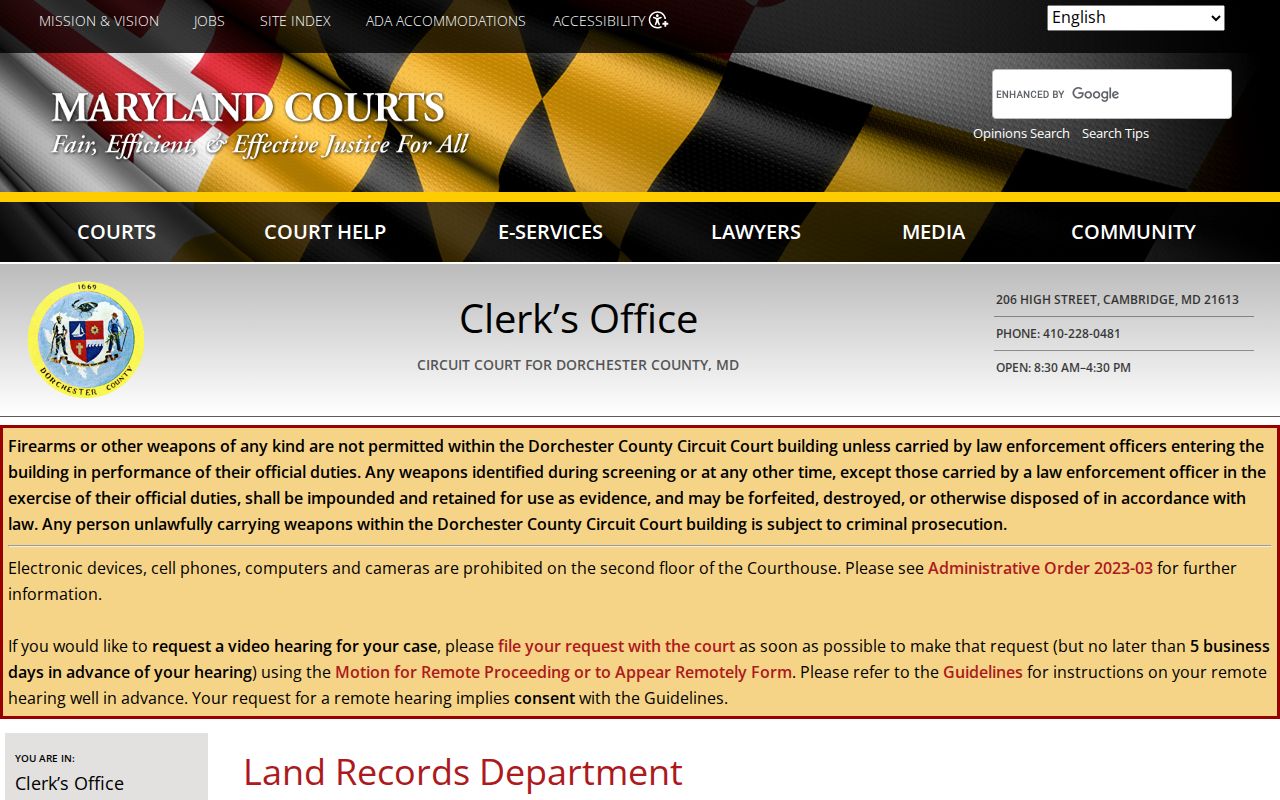
The office sits at 206 High Street in Cambridge. Bring the parcel's account number, the deed reference, and any party names so the Clerk can pull the correct instrument without delay.
Dorchester Owner Confirmation Notes
Good notes beat a bare name. When you confirm a Dorchester County owner, save the SDAT account number, premises address, mailing address, transfer date, and deed reference. Note the date you searched too. Add the newest deed's grantor, grantee, instrument type, recording reference, and legal-description match. That trail is short. It pays off later if a discrepancy appears. A change in the property records may need explaining as well.
SDAT cannot reverse-search from a person's name alone. Start instead from a known property address, a deed reference, or a business entity connection. The general Dorchester property search explains the address and parcel mechanics. Meanwhile, the current-owner record carries the present-tense evidence of who holds title.
Ownership After Death in Dorchester
A deceased owner can stay on the tax roll while an estate is open or later records lag. Search the deed reference first, then probate when a personal representative, estate, or heirs appear in the transfer trail. A deed from a representative needs the estate authority that backs it. The tax mailing name is not the whole story. Probate orders can change the answer. So can trusts, survivorship language, and later corrective deeds. For a purchase or contested estate, only a qualified Maryland title professional should examine the complete chain.
Anchor the parcel with the last recorded deed. Try the Dorchester County Register of Wills. Maryland Case Search also works for the estate. Ask for the docket, will, letters, inventory, account, and any petition or order authorizing sale or distribution. MDLandRec helps too. Search it for the personal representative, the estate, heirs, and the buyer in both party directions. A foreign proceeding may appear when a decedent lived outside Maryland but owned Dorchester County land, so match the probate legal description and later deed to the SDAT account and GIS parcel before naming a successor owner.
A death certificate proves death for an eligible requester. It does not transfer real estate. A will is similar. It can express intent, but the admitted probate record, survivorship terms, court authority, and recorded conveyance determine how the public ownership trail continues. Date every event, since estate administration and assessment-roll updates often run on different schedules.
Dorchester Ownership and Plats
A parcel map settles doubts fast. It confirms the account matches the intended tract. This matters when two roads sound alike. It also matters when a rural property lacks a house number. Recorded plats add another layer. They carry subdivision, lot, block, road, and easement details that a deed description may only skim. Neither source replaces the deed. Yet both lower the risk. They keep the right owner name off the wrong Dorchester County land. Use Dorchester PLATS.NET whenever a deed cites a plat or a named development. Match the lot and subdivision references before continuing. Road dedications, lot-line abandonment, and parcel consolidation can all explain a mismatch. That is why today's GIS outline may differ from an older deed description.
Ask Dorchester Offices Directly
When online searches stall, an owner search still has legs. The Clerk's public research room offers land-record access and copies on the spot. Dorchester Planning and Zoning can sort out mapping, subdivision, addressing, and permit questions. Finance and Treasury handles local tax administration, while SDAT keeps the assessment roll. Aim each question at the office that created the record. No single custodian should have to interpret another system's files for you.
Bring specific keys along. A street address will speed things up. So will the ten-digit account, map and parcel, lot number, owner name as indexed, and any known Book/Page. Ask for the record itself, not a legal conclusion. Under the Maryland Public Information Act, a written request can seek identifiable agency records beyond routine counter or portal access. It remains subject to applicable exemptions and fees.
Document a Dorchester Owner Answer
A defensible answer identifies the parcel as carefully as the person. Write down the premises address, account, map and parcel, owner name exactly as displayed, and transfer date. Do not skip the deed reference. The deed itself deserves the same care. Note the grantee, grantor, recording date, instrument type, legal description, and prior reference. If an entity holds title, record its exact legal name and current state status. Do not treat a registered agent as the landowner.
Say the newest deed and the assessment roll disagree. Label both results with their search dates. Ask the custodians which reflects the latest update. This discipline keeps an old display, a similar name, or a neighboring parcel from turning into a false ownership claim. It also leaves a compact record for a title professional to review. That matters if the case ever demands legal reliance.
Dorchester Owner Record Limits
An assessment owner name is not a title opinion. Mortgages, releases, easements, court orders, and probate events can all affect interests. The owner field never explains these. Maryland Safe at Home may shield qualifying real-property address information. That protection applies when program steps are completed before a transaction. State officials also warn that record monitoring cannot prevent deed fraud. It can, however, help reveal an unfamiliar transfer. Compare SDAT transfer fields with MDLandRec, and report a suspect filing promptly.
Lawful Dorchester Owner Research
Public records can identify an assessed or recorded owner of record in Dorchester County. They cannot prove who lives at the premises. They also cannot expose a private trust beneficiary or settle every title defect, so rely only on information the custodian lawfully releases.
Lawful use. Dorchester owner records support purchase research, boundary questions, and estates. Never use them to stalk, harass, intimidate, or harm anyone.