
What a Dorchester County Property Value Means
Several value fields sit on the SDAT parcel card, and each answers a different question. According to Dorchester County tax material, Maryland assesses real property at 100 percent of market value. That assessment follows a three-year cycle. It does not convert an old deed price into a current opinion. Nor does it promise any particular result at sale.
| Value | What It Is | Where |
|---|---|---|
| Current or assessed value | SDAT’s full-cash value as of the most recent assessment | SDAT Real Property record |
| Land value | The land component of the roll value | SDAT value section |
| Improvement value | The component attributed to buildings or improvements | SDAT value section |
| Sale price or consideration | The amount recorded for a title transfer, which may not be an open-market price | SDAT transfer fields and recorded deed |
Assessing at full market value is the state's goal on paper. The valuation date and the mass-assessment method still shape the number you see. A deed between relatives may state consideration that has no place among comparable sales. So may a partial interest or another non-market conveyance. Context decides.
Where Dorchester County Property Values Are Recorded
The Maryland State Department of Assessments and Taxation maintains the assessment roll. Its Real Property Search takes a Dorchester street address, an account identifier, or a map reference. Results can include Current Value, Base Value, Land, Improvements, the assessment year or status, property use, year built, enclosed area, sale details, and deed references. For the billing side of those state figures, the county tax information page lays out the local context.
The recorded conveyance itself lives in the Circuit Court land records. Pull the Liber and Folio or deed reference. Read the actual instrument, including its stated consideration. An assessment card only summarizes a transfer. The deed can show a nominal amount or an estate settlement. It may involve a related party, or less than the full interest. That distinction matters before any price is treated as market evidence.
Land and Improvement Value in Dorchester County
Land and Improvements are components of one valuation, not rival estimates. Read them alongside Current Value plus the parcel's Use, Vacant status, year built, area, and any Last Notice of Major Improvement. One component can shift and explain a change on the roll even though the deed has stayed the same.
| SDAT Field | Question It Helps Answer | Context to Preserve |
|---|---|---|
| Land | How much of the roll value is assigned to the site | Acreage, use, zoning, and preferential use |
| Improvements | How much is assigned to structures | Year built, area, condition indicators, permit notices |
| Base Value | The baseline shown for assessment comparison | Assessment cycle and notice date |
| Current Value | The latest full-cash assessment on the card | Status and effective assessment period |
Preferential agricultural land is often carried at use value rather than ordinary market value. Check that field first, then match acreage and use, before comparing rural tracts.
The Three-Year Dorchester County Revaluation Cycle
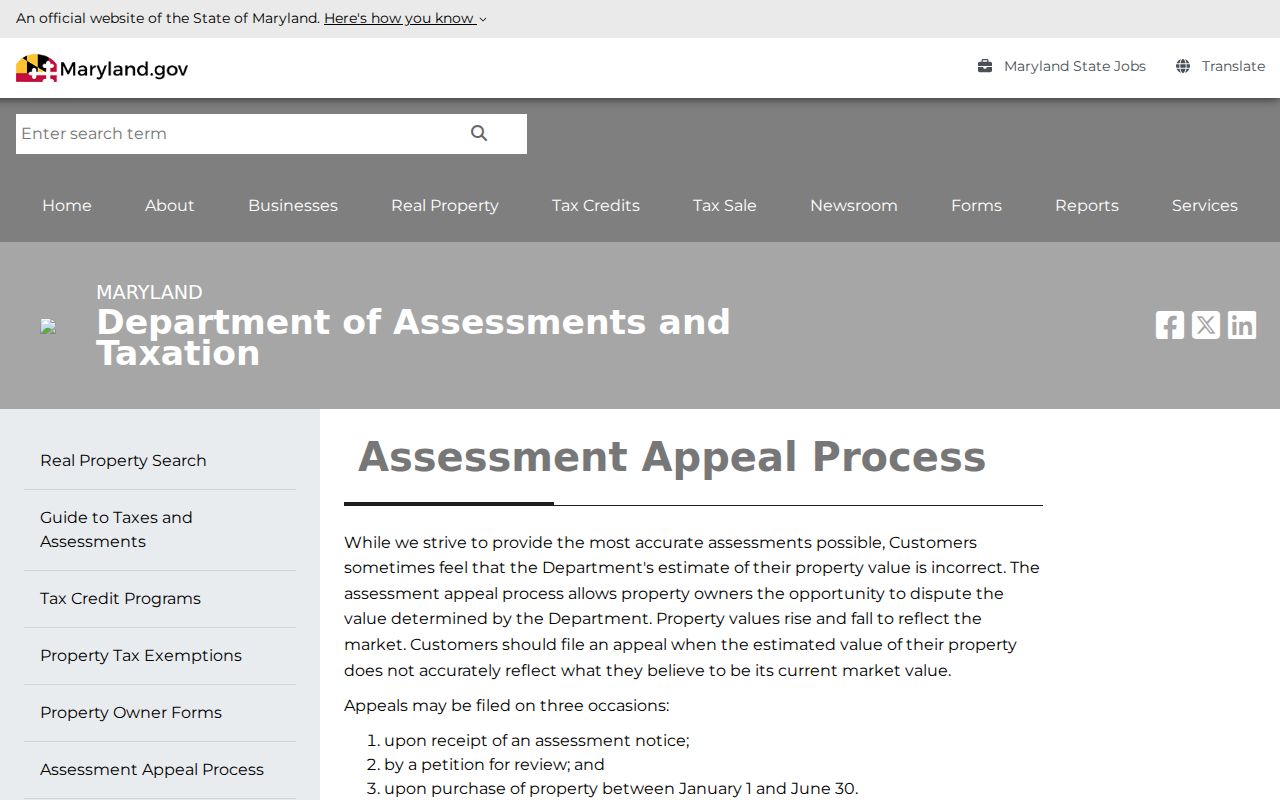
County tax material places SDAT reassessments on a three-year cycle. The cycle uses 100 percent of market value. A parcel card therefore belongs to an assessment cycle. It is not a live feed of neighborhood prices. Record the assessment year whenever you note a Dorchester County property value. The state assessment process page describes the reassessment framework and notice steps.
A recent sale and the assessment roll move on their own timelines. The Transfer Date may reflect the day the deed was recorded. That date can trail settlement. No fixed daily update interval exists. When a sale is new, date-stamp the SDAT record and set it beside the deed. Guessing when the roll should catch up helps no one.
Look Up an Assessed Value in Dorchester County
Any reliable lookup starts by proving which parcel the value belongs to. SDAT will not search by owner name, ZIP, town, neighborhood, or subdivision. Use the exact street address or a parcel key instead. Save enough identifying fields to keep a value from landing on the wrong land.
- Open SDAT Real Property Search, choose Dorchester, and select address, account, or map search.
- Match premises address, Account Identifier, district, map, grid, parcel, lot, and legal description.
- Copy Land, Improvements, Base Value, Current Value, assessment year, and property-use fields.
- Record Sale Date, Transfer Date, Price/Consideration, seller, and Deed Reference separately.
- Use the deed reference in MDLandRec when the nature of the transfer could change the meaning of the price.
- Assessed value
- The value assigned through the public assessment process for taxation.
- Market value
- An estimate of full cash value as of a stated date, not a guaranteed sale price.
- Assessment ratio
- The relationship between assessed and market value; Dorchester material states a 100-percent level.
- Sale or consideration price
- The amount reported for a transfer, which may reflect a non-market transaction.
- Reassessment
- The periodic process used to set a new value on the state roll.
Recorded Sale Price Versus Dorchester County Assessed Value
Price and Current Value answer different questions. Consideration belongs to a transfer. Current Value belongs to an assessment period. A deed may involve relatives or an estate. It may cover a partial interest or some other arrangement. Any of these is not an arm's-length purchase. Read the Sale Date and the deed before calling any figure market evidence.
Even a normal sale can produce a price that differs from a later assessment. The dates and methods differ. Compare similar use, acreage, land and improvement mix, and timing. A waterfront or Critical Area parcel should not be stacked against an inland lot. A warehouse plat cannot stand in for a house.
Why Taxable Amounts Can Differ From Dorchester County Value
Principal Residence status, Homestead Application Status, the Homeowners' Tax Credit, exemptions, special tax areas, and preferential agricultural treatment all shape the tax picture. None of them rewrite sale history. A homestead cap limits taxable assessment growth for qualifying accounts. It says nothing about resale price.
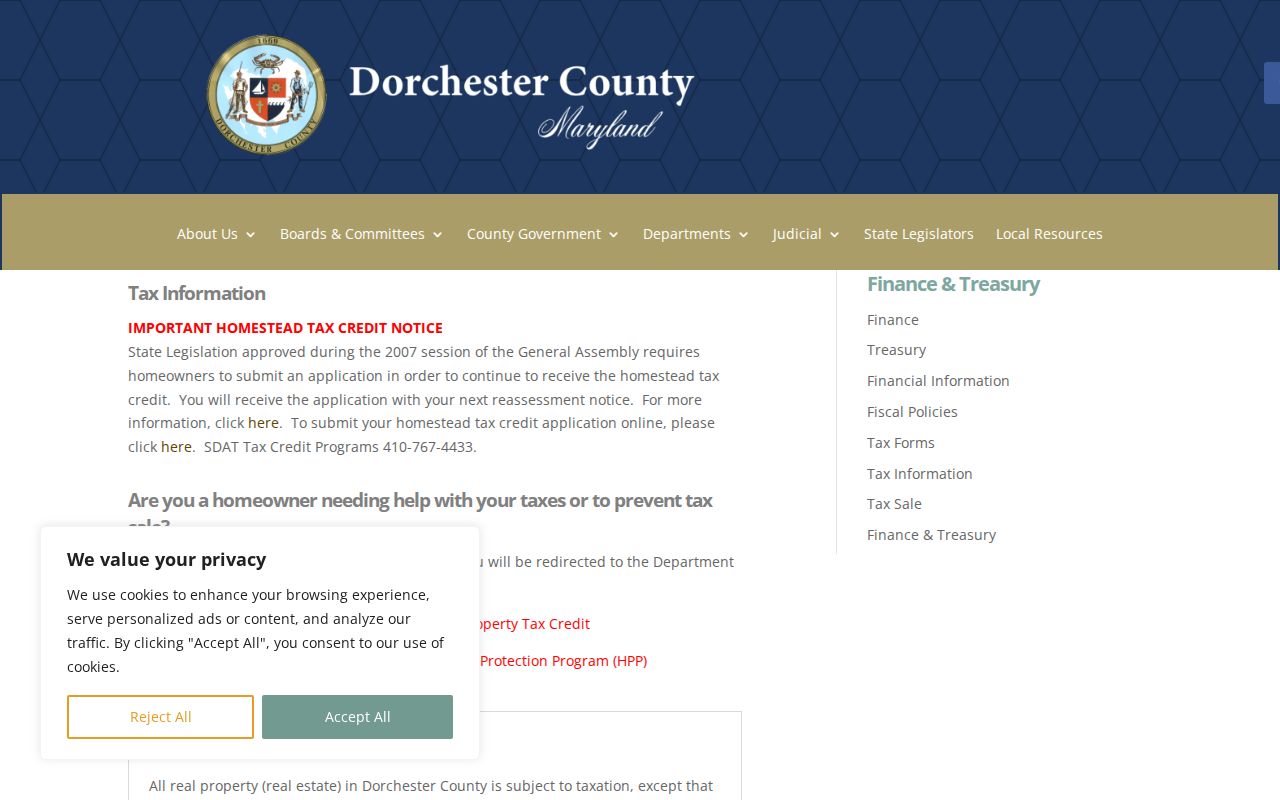
Keep value interpretation apart from bill arithmetic. Rates, credits, due dates, and appeal procedure belong in the Dorchester County property tax records guide. Here the point is simpler. An exemption or cap can push the taxable figure away from Current Value.
Town and Parcel Context Behind a Dorchester County Value
Cambridge, Hurlock, and East New Market all sit on the same state assessment system. Their parcel records still differ in context. Cambridge mixes waterfront lots, Critical Area rules, historic districts, and newer subdivisions. Hurlock holds older additions, Main Street property, and growth-area land. East New Market pairs small historic lots with Route 392 planning. It also adds Historic District Commission review. The state publishes no city-by-city appreciation series. A fair comparison leans on dated parcel records instead. Match property use, lot or acreage, the assessment cycle, improvements, and the recorded sale type. Only then weigh two figures against each other. Municipal tax rates change a bill, not the assessment method. Legal and planning context explains stubborn gaps. A Cambridge waterfront lot may carry Critical Area or flood review. An East New Market historic lot may have preservation records. Agricultural land may show preferential use value. None of this replaces an appraisal. Each fact shows which fields to match. That saved record set shows whether a change came from the land, an improvement, a transfer, or a different assessment period. The land, an improvement, a transfer, or a different period each leave a different mark.
What a Dorchester County Property Value Does Not Tell You
An assessment figure cannot predict today's negotiated price. Buyers and sellers set that number through the market. The roll leaves out interior condition, contract terms, financing details, inspection results, and sudden shifts in demand. GIS overlays and permit records add helpful context, yet neither turns the state tax roll into an appraisal.
Value is not price. Dorchester County assessed value supports taxation and is not what a property will necessarily sell for. It is not a licensed appraisal.
The roll answers the assessment question. The deed answers the transfer question. A qualified appraiser answers the market-value question, and keeping those roles separate is the clearest way to read a Dorchester County property value.